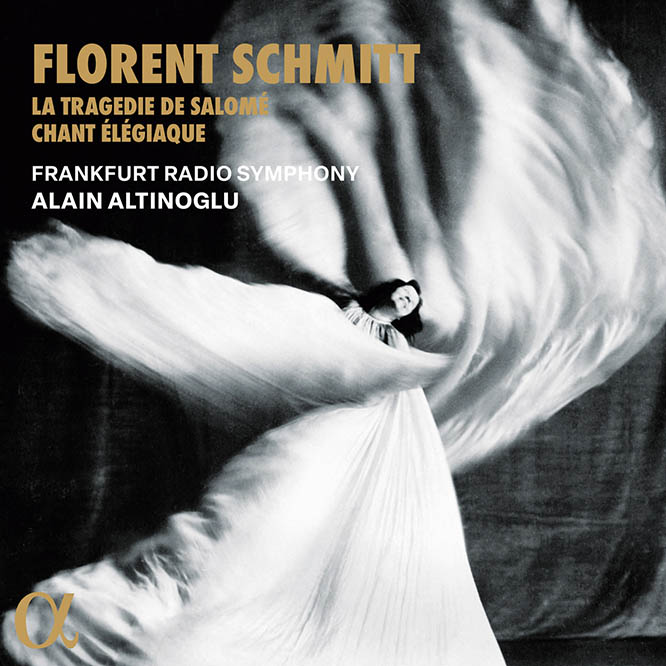
| 01. La Tragédie de Salomé, Op. 50: I. Prélude 02. La Tragédie de Salomé, Op. 50: II. Deuxième tableau 03. La Tragédie de Salomé, Op. 50: III. Troisième Tableau 04. La Tragédie de Salomé, Op. 50: IV. Vif 05. La Tragédie de Salomé, Op. 50: V. Quatrième tableau 06. La Tragédie de Salomé, Op. 50: VI. Danse du paon. Introduction 07. La Tragédie de Salomé, Op. 50: VII. Danse du paon. Proprement dite 08. La Tragédie de Salomé, Op. 50: VIII. Cinquième tableau 09. La Tragédie de Salomé, Op. 50: IX. Danse des serpents. Introduction 10. La Tragédie de Salomé, Op. 50: X. Danse des serpents. Proprement dite 11. La Tragédie de Salomé, Op. 50: XI. Sixième tableau 12. La Tragédie de Salomé, Op. 50: XII. Les enchantements sur la mer 13. La Tragédie de Salomé, Op. 50: XIII. Animé 14. La Tragédie de Salomé, Op. 50: XIV. Danse de l’acier 15. La Tragédie de Salomé, Op. 50: XV. Animé 16. La Tragédie de Salomé, Op. 50: XVI. Lent mais chaleureux et soutenu 17. La Tragédie de Salomé, Op. 50: XVII. Animé 18. La Tragédie de Salomé, Op. 50: XVIII. Vif. Mouvement de la danse joyeuse 19. La Tragédie de Salomé, Op. 50: XIX. Chant d’Aiea 20. La Tragédie de Salomé, Op. 50: XX. Danse blanche 21. La Tragédie de Salomé, Op. 50: XXI. Très lent 22. La Tragédie de Salomé, Op. 50: XXII. Danse de l’effroi 23. Chant élégiaque, Op. 24 In 1907 Florent Schmitt composed music to accompany a ‘mimodrame’ danced by Loie Fuller, La Tragedie de Salome. His score is bursting with colour, energy and voluptuousness – and also with oriental influences stemming from his travels to Morocco and Constantinople, where he discovered the howling dervishes. The final scene features the heart-rending ‘Chant d’Aica’, an oriental melody sung by a soprano. This music, though bold and modern for the listeners of 1907, nonetheless aroused the admiration of another composer, Igor Stravinsky, to whom Schmitt dedicated the Symphonic Suite he subsequently derived from the work. However, Alain Altinoglu, at the helm of the Frankfurt Radio Symphony Orchestra of which he has been Music Director since 2021, has chosen to record the original version of this landmark of early twentieth-century French music. The beautiful Chant elegiaque, in its 1911 version for cello and large orchestra, completes this programme. |
声明:本站所有hires无损音乐均转载于互联网,并不代表本站立场!如若本站内容侵犯了原著者的合法权益,可联系我们进行处理! 拒绝任何人以任何形式在本站发表与中华人民共和国法律相抵触的言论!