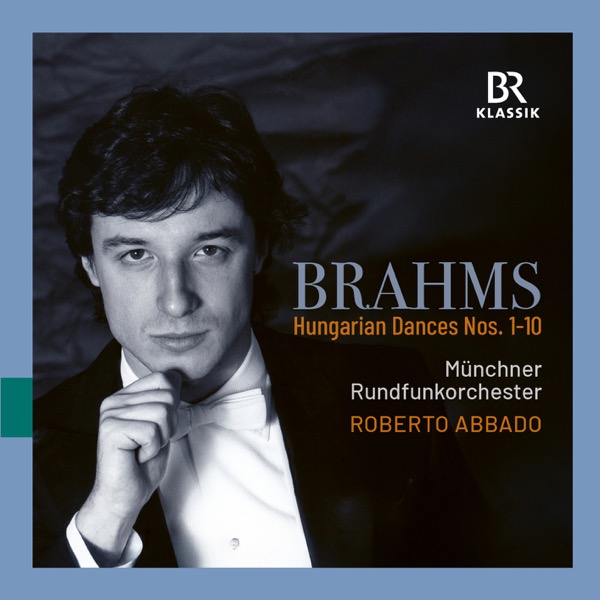
| 01. 21 Hungarian Dances, WoO 1: No. 1 in G Minor (Version for Orchestra) 02. 21 Hungarian Dances, WoO 1: No. 2 in D Minor (Arr. for Orchestra by Andreas Hallén) 03. 21 Hungarian Dances, WoO 1: No. 3 in F Major (Version for Orchestra) 04. 21 Hungarian Dances, WoO 1: No. 4 in F-Sharp Minor (Arr. for Orchestra by Paul Juon) 05. 21 Hungarian Dances, WoO 1: No. 5 in G Minor (Arr. for Orchestra by Albert Parlow) 06. 21 Hungarian Dances, WoO 1: No. 6 in D Major (Arr. for Orchestra by Albert Parlow) 07. 21 Hungarian Dances, WoO 1: No. 7 in F Major (Arr. for Orchestra by Martin Schmeling) 08. 21 Hungarian Dances, WoO 1: No. 8 in A Minor (Arr. for Orchestra by Hans Gál) 09. 21 Hungarian Dances, WoO 1: No. 9 in E Minor (Arr. for Orchestra by Hans Gál) 10. 21 Hungarian Dances, WoO 1: No. 10 in F Major (Version for Orchestra) Before the publication of his Hungarian Dances in their original version for piano four hands, Johannes Brahms was hardly known to the educated middle classes, but the works ensured that the composer became a household name. In their subsequent orchestral versions, the Dances entered the repertoire of prestigious concert orchestras and, after music had become technically reproducible, went on to become even more massively popular. On this CD, BR-KLASSIK presents Brahms’ 21 Hungarian Dances in their orchestral versions, in a studio production with the Munich Radio Orchestra under its former chief conductor Roberto Abbado. Johannes Brahms had become acquainted with Hungarian melodies and scales through the Hungarian violinist Eduard Reményi, with whom he had undertaken his first concert tour in 1853. His Hungarian Dances for piano four hands were composed from around 1858 onwards; the first ten were published in 1869, the others in 1880. In 1872, Brahms presented a version of the first ten dances for solo piano and in 1873 he orchestrated Dances Nos. 1, 3 and 10, premiering them in Leipzig on February 5, 1874. In his Hungarian Dances, Brahms skilfully combined various Hungarian folk song melodies with his own. The fact that the originals were, and remain, unknown to most listeners is probably what makes the compositions so appealing. His Hungarian Dances were extremely popular right from the start, and are still among his best-known works today. None other than Antonín Dvořák was responsible for the orchestrations of other dances, and popular orchestral versions were also produced by Albert Parlow, Andreas Hallén, Martin Schmeling, Paul Juon and Hans Gál. |
声明:本站所有hires无损音乐均转载于互联网,并不代表本站立场!如若本站内容侵犯了原著者的合法权益,可联系我们进行处理! 拒绝任何人以任何形式在本站发表与中华人民共和国法律相抵触的言论!