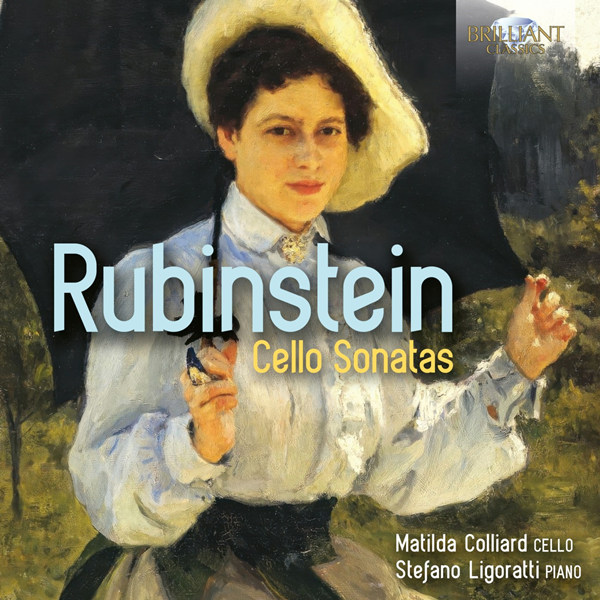
| Anton Rubinstein (1829–1894) was a towering figure in 19th-century music: a virtuoso pianist, conductor, composer, and educator whose influence extended well beyond his own works. Born in Russia, Rubinstein gained international fame as a pianist of almost legendary ability, rivaled only by Franz Liszt. He was also instrumental in establishing a Russian school of music, founding the St. Petersburg Conservatory in 1862, where he trained a new generation of composers and performers. As a composer, Rubinstein was remarkably prolific, writing symphonies, operas, chamber music, and countless works for piano. While his style is rooted in the German Romantic tradition, particularly Mendelssohn and Schumann, Rubinstein’s music often reflects his own expansive temperament, with a combination of lyrical expressiveness and dramatic power. Among his chamber works, the two cello sonatas hold a special place. The Cello Sonata No.1 in D major, Op.18 (1852) reflects the youthful Rubinstein’s energy and lyricism. Written in three movements, it showcases both the cello’s singing qualities and the pianist’s virtuosity. The writing is full of warmth, charm, and soaring Romantic melodies, though some critics have noted its more traditional, German-influenced character. Still, it demonstrates Rubinstein’s gift for crafting heartfelt, expressive music that gave performers a chance to shine. More ambitious is the Cello Sonata No.2 in G minor, Op.39 (1857), composed only five years later but revealing greater maturity and depth. Structured in four movements, it has a broader scope and darker, more dramatic character. The interplay between cello and piano is more intricate, with the instruments treated as equal partners. Its passionate themes, stormy climaxes, and lyrical slow movement make it a more compelling work, often considered Rubinstein’s finest chamber composition. Though not as frequently performed today as works by Brahms or Chopin, Rubinstein’s cello sonatas remain valuable contributions to the Romantic repertoire, offering a glimpse into the artistry of a composer who bridged Russian and European traditions. Played with passion and tenderness by Matilda Colliard (cello) and Stefano Ligoratti (piano). 01. Cello Sonata No. 1 in D Major, Op. 18 (1852): I. Allegro Moderato |
声明:本站所有hires无损音乐均转载于互联网,并不代表本站立场!如若本站内容侵犯了原著者的合法权益,可联系我们进行处理! 拒绝任何人以任何形式在本站发表与中华人民共和国法律相抵触的言论!