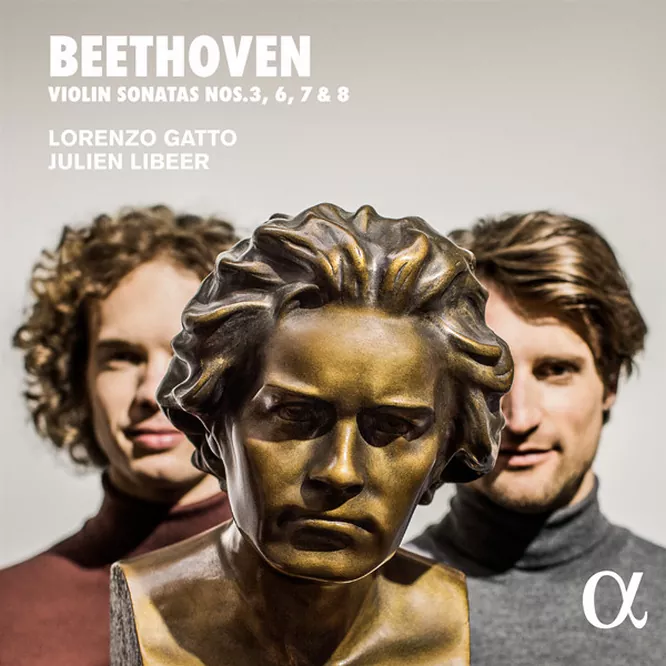
CD1
01. Violin Sonata No. 3 in E Flat-Major, Op. 12 No. 3 I. Allegro con spirito
02. Violin Sonata No. 3 in E Flat-Major, Op. 12 No. 3 II. Adagio con molta espressione
03. Violin Sonata No. 3 in E Flat-Major, Op. 12 No. 3 III. Rondo. Allegro molto
04. Violin Sonata No. 7 in C Minor, Op. 30 No. 2 I. Allegro con brio
05. Violin Sonata No. 7 in C Minor, Op. 30 No. 2 II. Adagio cantabile
06. Violin Sonata No. 7 in C Minor, Op. 30 No. 2 III. Scherzo. Allegro – Trio
07. Violin Sonata No. 7 in C Minor, Op. 30 No. 2 IV. Finale. Allegro
08. Violin Sonata No. 6 in A Major, Op. 30 No. 1 I. Allegro
09. Violin Sonata No. 6 in A Major, Op. 30 No. 1 II. Adagio molto espressivo
10. Violin Sonata No. 6 in A Major, Op. 30 No. 1 III. Allegretto con variazioni
11. Violin Sonata No. 8 in G Major, Op. 30 No. 3 I. Allegro assai
12. Violin Sonata No. 8 in G Major, Op. 30 No. 3 II. Tempo di minuetto, ma molto moderato e grazios
13. Violin Sonata No. 8 in G Major, Op. 30 No. 3 III. Allegro vivace
CD2
01. Violin Sonata No. 1 in D Major, Op. 12, No. 1 I. Allegro con brio
02. Violin Sonata No. 1 in D Major, Op. 12, No. 1 II. Tema con variazioni. Andante con moto
03. Violin Sonata No. 1 in D Major, Op. 12, No. 1 III. Rondo. Allegro
04. Violin Sonata No. 10 in G Major, Op. 96 I. Allegro moderato
05. Violin Sonata No. 10 in G Major, Op. 96 II. Adagio espressivo
06. Violin Sonata No. 10 in G Major, Op. 96 III. Scherzo. Allegro – Trio
07. Violin Sonata No. 10 in G Major, Op. 96 IV. Poco allegretto
08. Violin Sonata No. 5 in F Major, Op. 24 Spring I. Allegro
09. Violin Sonata No. 5 in F Major, Op. 24 Spring II. Adagio molto espressivo
10. Violin Sonata No. 5 in F Major, Op. 24 Spring III. Scherzo. Allegro molto
11. Violin Sonata No. 5 in F Major, Op. 24 Spring IV. Rondo. Allegro ma non troppo
CD3
01. Violin Sonata No. 9 in A Major, Op. 47 Kreutzer I. Adagio sostenuto – Presto
02. Violin Sonata No. 9 in A Major, Op. 47 Kreutzer II. Andante con variazioni
03. Violin Sonata No. 9 in A Major, Op. 47 Kreutzer III. Finale (Presto)
04. Violin Sonata No. 4 in A Minor, Op. 23 I. Presto
05. Violin Sonata No. 4 in A Minor, Op. 23 II. Andante scherzoso, più allegretto
06. Violin Sonata No. 4 in A Minor, Op. 23 III. Allegro molto
07. Violin Sonata No. 2 in A Major, Op. 12, No. 2 I. Allegro vivace
08. Violin Sonata No. 2 in A Major, Op. 12, No. 2 II. Andante più tosto allegretto
09. Violin Sonata No. 2 in A Major, Op. 12, No. 2 III. Allegro piacevole
The final part of this intelligent and well-rounded triptych certainly deserves a Qobuzissime! It has been several years since we have been following this grandiose but relaxed duo, made up of violinist Lorenzo Gatto and pianist Julien Libeer. The Belgian pair have brought their complete collection of Beethoven’s sonatas for violin and piano to a close. There is a lot of spontaneity in this integral work, yet this freshness is not synonymous with offhandedness. On the contrary, the fruit of a well thought-out project, it unfolds as a thrilling story in three parts.
The first volume opened like a stage curtain on this landmark of Beethoven with the iconic Kreutzer sonata, a strong score which trumps the expectations of the genre. The vehement drama of the first movement, slow and in a minor key, contrasts with the gentle nature of the second movement and confirms that the sonata is well and truly a format for two instruments on an equal footing and not just a support act to the piano, a Steinway in this instance.
The second one delineated the milestones of an expanding genre. From the first to the last sonata, via the most popular nicknamed Spring, we bear witness to a general amplification of style. From Opus 12 to Opus 96, the form expands, the technical difficulty of playing increases and the light-hearted fun gives way to a more energetic rhetoric. For this second album, the duo chose the lustrous power of Chris Maene’s parallel-stringed piano. The instrument affords the necessary resonance to the interpretation of this sometimes outright zesty, sometimes tenderly subtle score.
The third volume frames the Steinway’s radiance (Sonatas 6 and 7) with the more ample Maene piano (Sonatas 3 and 8) and is dedicated to the works conceived when the composer’s hearing began to falter. Paradoxically, this nightmare for Beethoven has brought about a gift for his listeners. Varied combinations of timbres, styles and character are constantly renewed in this cycle which Gatto and Libeer faithfully interpret throughout its entirety.
Our award of recognition is also a retrospective on the first two milestones of this adventure which has valiantly held its promise. An important integral work to explore and encourage others to do so as well! |