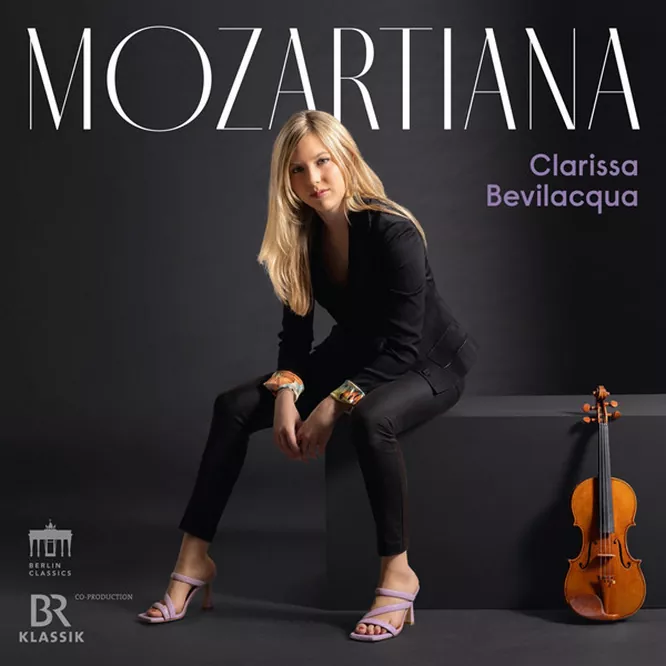
| 01. Mozart- Sonate für Violine und Klavier in B-Dur, Op. 7- I. Allegro 02. Mozart- Sonate für Violine und Klavier in B-Dur, Op. 7- II. Adagio ma non troppo 03. Mozart- Sonate für Violine und Klavier in B-Dur, Op. 7- III. Presto 04. Hindemith- Sonate für Violine, Op. 31, No. 2- I. Leicht bewegte Viertel 05. Hindemith- Sonate für Violine, Op. 31, No. 2- II. Ruhig bewegte Achtel 06. Hindemith- Sonate für Violine, Op. 31, No. 2- III. Gemächliche Viertel 07. Hindemith- Sonate für Violine, Op. 31, No. 2- IV. Fünf Variationen über das Lied -Komm, lieber Mai- von Mozart 08. Jani- Cadenza für Violine und Klavier 09. Willeitner- To be Mozart or not to be! (Basierend auf Motiven von Mozarts Violinkonzert No. 3 G-Dur KV 216) 10. Beethoven- 12 Variationen über -Se vuol ballare- in F-Dur, WoO 40 11. Schnittke- Moz-Art für zwei Violinen (Nach dem Fragment KV 416d) 12. Bosso- Ascoltate, dei della vendetta- I. Parte prima (Rapsodia) 13. Bosso- Ascoltate, dei della vendetta- II. Parte seconda (Fuga) 14. Sollima- Trazom With her new album “Mozartiana,” award-winning violinist Clarissa Bevilacqua presents a fascinating musical tribute and at the same time opens up new perspectives on a timeless genius. Clarissa Bevilacqua, who studied at the renowned Mozarteum Salzburg and won both first prize and the audience prize at the Mozart International Competition 2020, combines past and present in a captivating musical dialogue on “Mozartiana.” In addition to masterpieces such as F. X. Mozart’s Sonata for Violin and Piano, Beethoven’s 12 Variations on “Le Nozze di Figaro” and Schnittke’s Moz-Art for ensemble, the album features contemporary compositions written especially for this album by Felix Willeitner, Sophia Jani, Jorge Bosso and Giovanni Sollima – all of which are world premiere recordings. As founder and artistic director of DYNAMIKfest Salzburg, Bevilacqua once again demonstrates her passionate commitment to combining classical and modern music. Mozartiana is not only a tribute to Mozart–it is a living commitment to artistic curiosity, diversity, and musical dialogue across the centuries. |