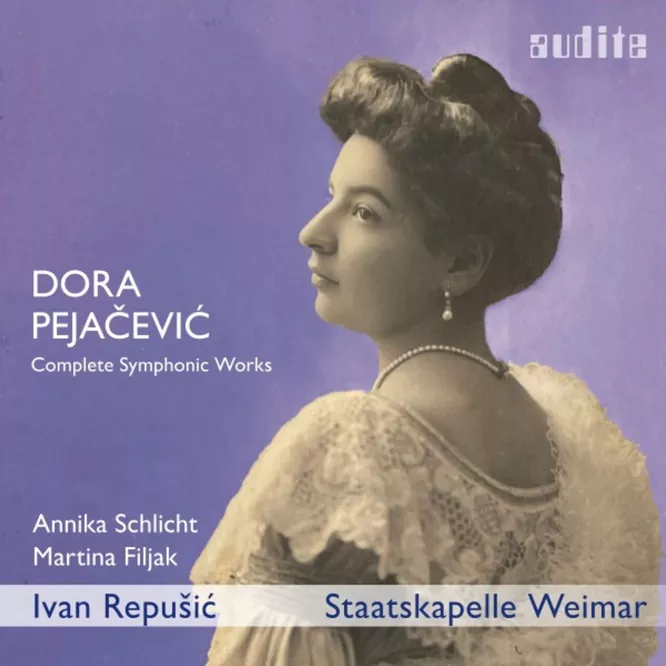
| 01 – Metamorphosis (Verwandlung), Op. 37b 02 – Love Song (Liebeslied), Op. 39 03 – Zwei Schmetterlingslieder, Op. 52_ No. 1 Goldne Sterne, blaue Gl?ckchen 04 – Zwei Schmetterlingslieder, Op. 52_ No. 2 Schwebe, du Schmetterling 05 – Symphony in F-Sharp Minor, Op. 41_ I. Andante Masestoso 06 – Symphony in F-Sharp Minor, Op. 41_ II. Andante Sostenuto 07 – Symphony in F-Sharp Minor, Op. 41_ III. Scherzo. Molto Allegro 08 – Symphony in F-Sharp Minor, Op. 41_ IV. Allegro Appassionato 09 – Phantasie concertante in D Minor, Op. 48_ Allegro molto moderato – Moderato e molto espressivo – Allegro Viv 10 – Ouverture in D Minor, Op. 49 11 – Piano Concerto in G Minor, Op. 33_ I. Allegro Moderato 12 – Piano Concerto in G Minor, Op. 33_ II. Adagio con estro Poetico 13 – Piano Concerto in G Minor, Op. 33_ III. Allegro con Fuoco 14 – Nocturne in C-Sharp Major, Op. 50 No. 1 (Arr. for Orchestra by Igor Kuljeric) Is there such a thing as “female” and “male” music? The life of Croatian composer Dora Pejačević clearly shows that – like many other women composers of the late 19th and early 20th centuries – she had far fewer opportunities in the musical world than her male colleagues. Yet her aristocratic background and a mother who was herself a composer afforded her certain freedoms. Step by step, Pejačević found her way into concert programmes throughout the Habsburg Monarchy, with works ranging from piano and vocal music to the symphony, a genre traditionally considered “male.” The reception of her music illustrates how difficult it is to classify music according to gender: while some critics described her compositions as “feminine”, others recognised in them a “masculine” expressive power. What remains beyond doubt, however, is Dora Pejačević’s artistic significance – as one of the most outstanding women composers of her era. |